


Why dry wood makes all the difference
There is nothing quite like the first proper fire of autumn — the crackle, the glow, the way a room settles into warmth. But that pleasure depends almost entirely on what you feed the stove. Firewood that has been properly seasoned and stored will light easily, burn hot and leave very little behind. Wood that has been sitting damp under a tarpaulin will fight you every step of the way.
The reason is moisture. Freshly cut timber can be half water by weight. Every kilogram of that water has to be boiled off before the wood can genuinely burn, and boiling water takes energy — energy that should be heating your living room. Wet logs also produce more smoke, more tar and more creosote in the flue, which is both a chimney fire risk and a chore to clear. Aim for a moisture content of 20 per cent or below, and the difference in heat output is remarkable.
Choose the right spot before you cut a single log
Where you store your wood matters as much as how you stack it. Look for a position that catches sun and wind for most of the day, ideally against a south or west-facing wall or fence. Air movement is your ally — it carries moisture away from the logs, while still, shaded corners simply hold the damp in.
Keep the stack off the ground. A pallet, some sturdy bearers or a purpose-built log store with a raised base will do the job. Timber in direct contact with soil or paving wicks up moisture, and the bottom row will rot before it ever reaches your stove. Leave a gap between the stack and any wall so air can move behind it, and don't tuck it under a dense hedge or in a dip where water gathers.
Stack for airflow, not for looks
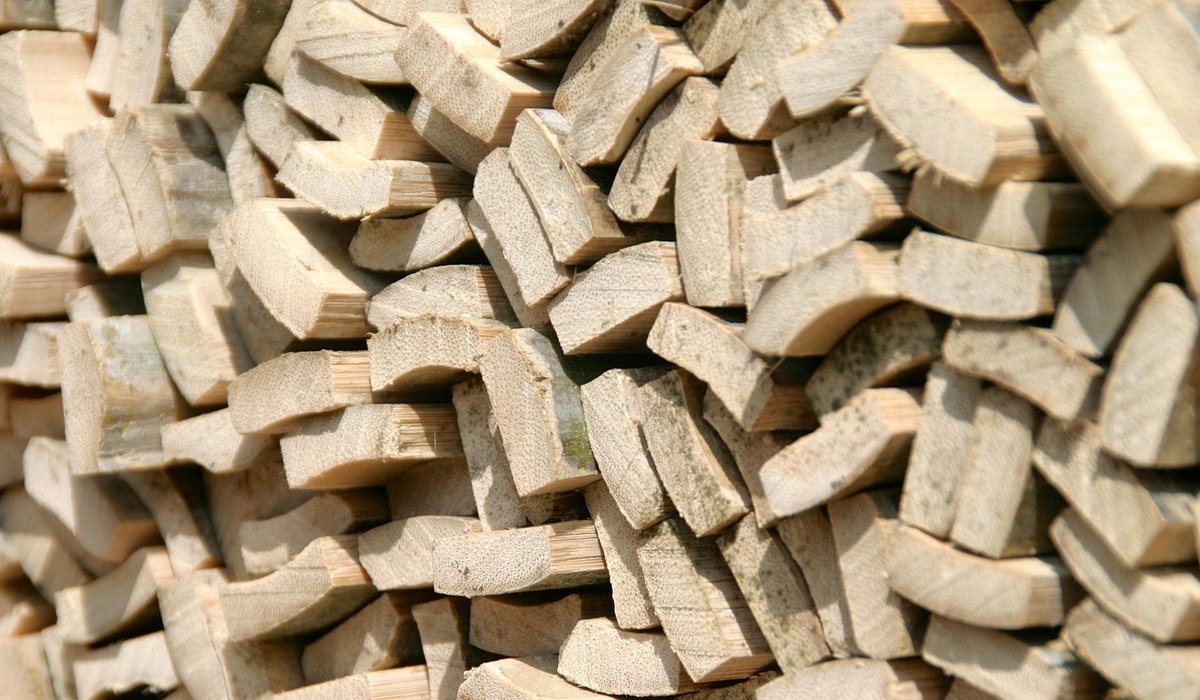
A neat, tight wall of logs looks handsome on a postcard, but it is poor storage. The aim is to let air move freely around as much of each log's surface as possible.
- Lay logs lengthways with the cut ends facing out, so air travels along the grain and out through the ends.
- Keep to a single row if you have the space — it dries quickest of all. If you need more capacity, leave gaps between rows.
- Vary the sizes, using smaller splits to fill awkward gaps without cramming everything solid.
- Build the stack no wider than it is high, so it stays stable but never becomes a dense block.
- Split large rounds before stacking — a log dried whole will still be wet in the middle months later.
Bark-side up is a decent rule of thumb for the top layer, as it sheds rain a little, but don't obsess over it. Airflow beats arrangement every time.
Cover the top, leave the sides open
Rain is the enemy, but so is a sealed tarpaulin. A cover that wraps the whole stack traps moisture inside and creates a humid little microclimate — exactly what you are trying to avoid.
Instead, cover only the top, with an overhang of a few inches so water runs off and away. A sheet of corrugated roofing, a piece of old slate or a breathable cover weighted down with a couple of bricks all work well. Leave the sides fully open to the breeze. If you do use a tarpaulin, choose a breathable one and fix it so it sits above the wood rather than pressed against it.
How long does it take, and how do you know it's ready?
Seasoning time depends on the species, the size of the splits and the weather. As a rough guide:
- Softwoods such as pine, spruce and larch: six to twelve months.
- Hardwoods such as ash, oak, beech and birch: twelve months to two years, with oak often needing the longer end.
- Ash is the traditional exception — it seasons quickly and burns well even when fairly fresh.
- Kiln-dried logs arrive ready to burn, but still need keeping dry once they are home.
To check, split a log and test the freshly exposed face with a moisture meter, pushing the pins in along the grain. Under 20 per cent is good; under 15 per cent is excellent. Without a meter, look for pale, greyish, cracked ends, logs that feel noticeably lighter than they did, and two pieces that knock together with a hollow crack rather than a dull thud. If they hiss and bubble in the firebox, they are not ready.
A few habits keep the whole system sweet: bring in only a day or two's worth of logs at a time so the house doesn't fill with damp air, keep the indoor basket topped up from a well-ventilated store, and restock from the back of the pile so older wood gets used first. Get the storage right and your stove will reward you with easy lighting, a clean burn and far more heat for every log you carry in.


Leave a reply